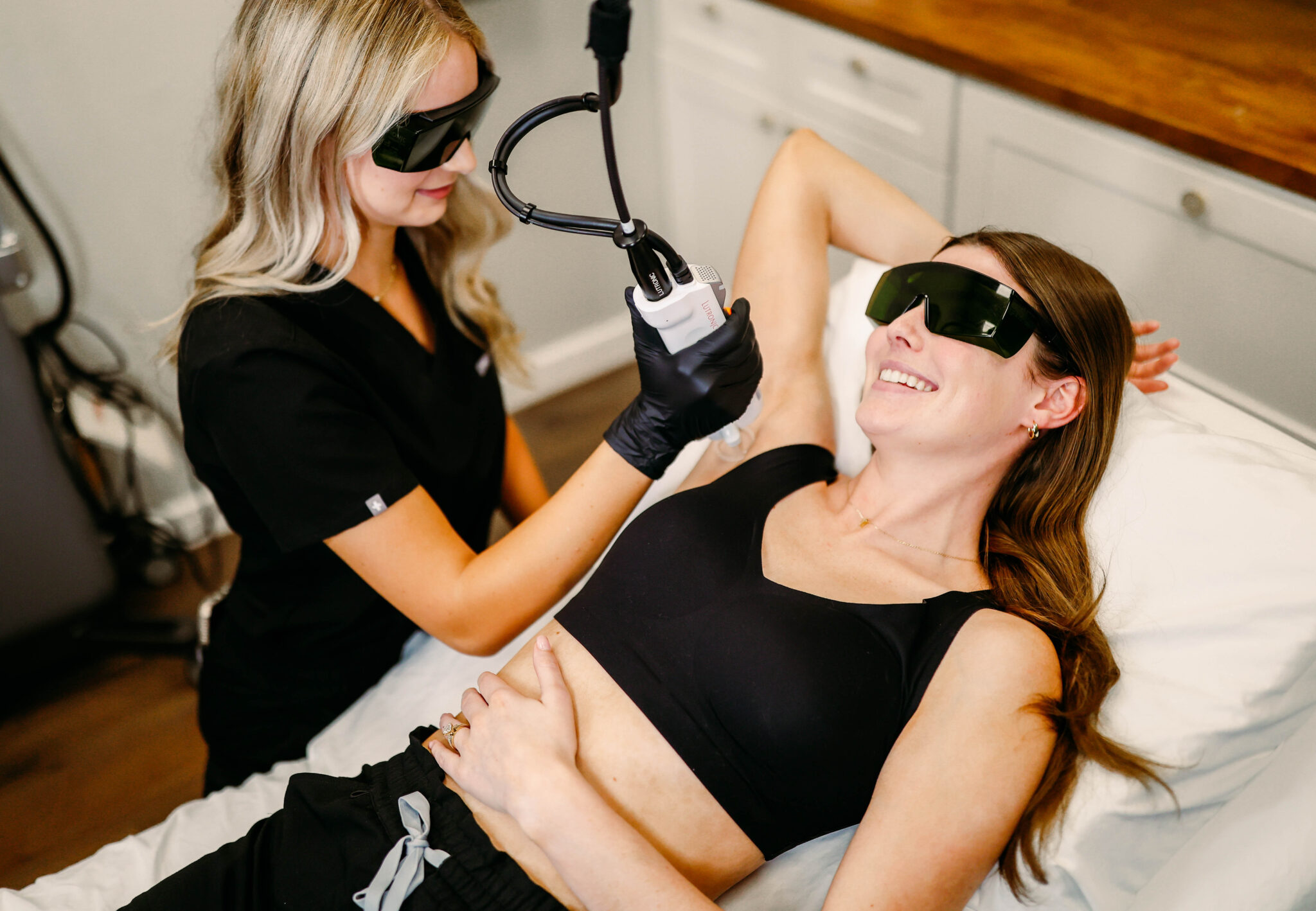
Laser Hair Removal for Sensitive Skin: What You Should Know Before Treatment

laser skin resufacing

For many people, the decision to look into laser hair removal starts with a bad week of shaving. The bikini line breaks out in red bumps after every pass of the razor, and waxing leaves the upper lip blotchy for the rest of the day. Skin that reacts this easily raises a fair question about whether a laser will calm things down or make them worse.

In most cases, sensitive skin is a good reason to consider laser treatment and a reason to plan it carefully. Clients with reactive skin often find that reducing hair at the follicle eases the irritation that daily shaving creates. The plan simply calls for more attention to settings and aftercare than it would for someone whose skin tolerates almost anything. This guide explains how laser hair removal in Abilene is adjusted for sensitive skin and what you should discuss with your provider before the first session.

What does “sensitive skin” mean in laser treatment?

Sensitive skin is a descriptive term dermatologists use for skin that reacts with stinging, burning, redness or itching to products and conditions most skin tolerates without trouble. It has no single diagnostic test, and the label covers a wide range of people, from those who flush after a hot shower to those living with a chronic skin condition.

Laser providers think about sensitivity in a more specific way. The questions that shape your plan concern how readily your skin becomes inflamed and how readily it produces extra pigment after an injury. A client with a fair, reactive complexion and a client with deeper skin that tends to leave dark marks behind both count as sensitive, though for different reasons and with different adjustments.

How does laser hair removal work on sensitive skin?

Laser hair removal relies on a principle called selective photothermolysis, first described by Massachusetts General Hospital researchers R. Rox Anderson and John A. Parrish in 1983. A laser emits light at a wavelength that a specific target in the skin absorbs. In hair removal, that target is melanin, the pigment concentrated in the hair shaft and in the bulb at the base of the follicle. The absorbed light turns to heat, and the heat damages the follicle’s ability to produce new hair while the surrounding tissue stays largely unharmed.

The surrounding skin also contains melanin, and that shared pigment explains most of the extra care sensitive skin requires. Every pulse asks the laser to heat pigment in the follicle far more than pigment in the surface layer of skin. Providers manage that balance through the energy level and the length of each pulse, along with cooling that protects the surface as the light passes through. Resurfacing lasers work on a different target, water in the tissue, which our guide on what laser resurfacing does for the skin explains in more detail.

Why does skin tone matter as much as sensitivity?

Clinicians classify skin using the Fitzpatrick scale, a system developed in 1975 by Harvard dermatologist Thomas B. Fitzpatrick to describe how skin responds to ultraviolet light. Type I always burns and never tans, while Type VI is deeply pigmented and rarely burns. Higher types carry more melanin in the epidermis, which competes with the hair for laser energy and raises the risk of post-inflammatory hyperpigmentation, the darkening that can follow any irritation to the skin.

Wavelength makes a measurable difference here. Longer wavelengths travel deeper and are absorbed less by surface pigment, so they are generally preferred for deeper skin tones. A review published in Lasers in Medical Science found that pigment changes occurred in up to 19 percent of patients treated with shorter-wavelength lasers, particularly those with darker skin, compared with 2 to 3 percent of patients treated with the longer-wavelength Nd:YAG laser (Lasers in Medical Science, 2006). Most of those changes were temporary, and the authors noted that permanent effects were very uncommon when trained professionals performed the treatment.

Which skin concerns need extra planning?

Some sensitivities change the plan more than others. The table below summarizes the concerns our providers ask about most often and how treatment is typically adjusted for each one.

Skin Concern Why It Matters for Laser Typical Adjustment
Rosacea Heat can trigger flushing and make small blood vessels more visible. Treat only when skin is calm, using conservative settings and extra cooling.
Eczema (Atopic Dermatitis) A weakened skin barrier reacts strongly to heat. Treat clear skin only and avoid active patches entirely.
Melasma or a History of Dark Marks Heat and inflammation can deepen existing pigment. Begin with a test spot, then use cautious settings alongside strict daily sun protection.
Psoriasis Skin injury can trigger new plaques, a response known as the Koebner phenomenon. Avoid active plaques and monitor treated areas between sessions.
Keloids or Raised Scars Some people form excess scar tissue after minor injury. Share your history at consultation and start with a test spot.
Razor Bumps and Ingrown Hairs Inflamed follicles are already irritated. Let active bumps settle first; over a series, laser usually reduces them.
Recent Tan or Sunburn Extra surface pigment absorbs more laser energy. Postpone treatment until the tan or burn has fully faded.

Can laser hair removal improve irritated skin?

For many clients, it can. Pseudofolliculitis barbae, the medical name for razor bumps, develops when a shaved hair curls back and grows into the skin, setting off inflammation around the follicle. It is especially common in people with tightly curled hair and tends to affect the beard area and the bikini line.

Laser treatment reduces the number of hairs available to become ingrown, and the hairs that remain usually grow back finer. Clients who first came in worried about irritation often find that their skin looks calmer by the middle of their series than it did when they were shaving every day.

Which medications and skincare products increase sensitivity?

Some prescriptions and over-the-counter products make skin more reactive to light, a property called photosensitivity. Others temporarily thin the outer layer of skin, so a familiar laser setting lands harder than expected. Your provider will review everything you use, and the following categories come up most often:

  • Retinoids and exfoliating acids. Products containing retinol or glycolic acid are usually paused for several days before facial treatment, and prescription tretinoin often calls for a slightly longer break.
  • Isotretinoin. This oral acne medication, once sold under the brand name Accutane, affects how skin heals. Many providers still ask patients to wait several months after finishing a course, although more recent dermatology guidance has questioned whether such a long delay is necessary.
  • Photosensitizing medications. Doxycycline and other tetracycline antibiotics can increase sensitivity to light, as can the herbal supplement St. John’s wort.
  • Recent skin treatments. A recent peel leaves the surface more fragile for a period of time. If chemical peels in Abilene are part of your routine, your provider will space them around your laser visits.

Why does a patch test matter?

A patch test, also called a test spot, is a small trial treatment performed on an inconspicuous part of the area you plan to treat. Your provider applies a few pulses at the intended settings and then waits to see how your skin responds before committing to a full session.

Redness and swelling usually show up within hours, so a day or two is enough to judge most reactions. Pigment changes develop more slowly, and providers often wait a week or longer before fully treating deeper skin tones or skin with a history of dark marks. That short delay costs very little and gives your provider real information about your skin in place of an educated guess.

Good to know

Tell your provider about any reaction to the test spot, including a mild one that faded quickly. A little lingering redness or a few small bumps can guide the settings for your full session, and those details are easy to forget by the time you come back.

How should you prepare for your first session?

Preparation starts a month or more before your first appointment, because the laser needs a hair root in place to work. Methods that pull hair out at the root, such as waxing or plucking, should stop four to six weeks before treatment. Shaving is the preferred method in the meantime. Shave the area within 24 hours of your appointment with a clean, new razor, which leaves the root intact while removing the hair above the surface that would otherwise heat up and irritate the skin.

Sun avoidance is the next priority. Our team asks clients to avoid sun exposure and tanning products for at least two weeks before each visit, since a tan adds pigment to the surface layer of skin and increases the chance of a burn or a dark mark. West Texas sunshine makes this harder than it sounds, and many Abilene clients start their series in the fall so that most sessions land in the cooler months. If you want a bronzed look for an event, a NUDA spray tan in Abilene is a much safer choice than sun exposure, provided the color has completely faded before your next laser visit.

In the week before your appointment, hold off on introducing new skincare products to the area. If your skin reacts to something new, it becomes difficult to tell whether a later reaction came from the laser or the product.

What does treatment feel like when your skin is sensitive?

Most clients compare each pulse to a quick snap from a rubber band followed by a brief flash of warmth. Areas with thinner skin or denser hair, such as the upper lip and the bikini line, tend to feel more intense than the legs or back. Integrated cooling, delivered through a chilled tip or a stream of cold air, calms the surface between pulses and makes a noticeable difference for reactive skin.

Your provider can adjust settings throughout the session, so speak up if a zone feels too hot. For especially sensitive areas, some clients are offered a topical numbing cream beforehand. Small areas such as the underarms take around 10 minutes, while full legs or the back can take up to an hour.

Which reactions are normal after treatment?

Mild redness and small raised bumps around the treated follicles are the two most common responses. The bumps, known as perifollicular edema, look a little like goosebumps and indicate that the follicles absorbed the energy as intended. Both usually settle within a few hours, though sensitive skin may take a day or two.

Acne-like breakouts appear in a small share of clients, most often younger patients. Blistering and changes in skin color are less common, and they are the reactions that careful settings and test spots are designed to prevent. A rare response called paradoxical hypertrichosis, in which hair grows thicker in or near a treated area, has been reported most often on the face and neck in people with darker skin types. Contact our clinic if you notice blistering, or redness that spreads or worsens after the first 48 hours.

How should you care for your skin afterward?

Gentle aftercare matters most in the first two days, while the skin is warm and the follicles are still inflamed:

  • Skip saunas and intense workouts for 24 to 48 hours, and that includes time in our infrared sauna.
  • Use a fragrance-free moisturizer, and hold a cool compress on any area that still feels warm.
  • Apply a broad-spectrum sunscreen to treated skin every day for the length of your series.
  • Leave retinoids and exfoliating products off the area for a few days, and let shedding hairs fall out on their own over the following two weeks.

How many sessions does sensitive skin need?

Hair grows in cycles. During the growth phase, known as anagen, a hair is firmly attached to its pigment-rich bulb, which makes it the stage the laser affects most. Hairs in the resting stages respond poorly, and because every follicle runs on its own schedule, only a portion of hairs are in the right phase at any single visit.

Most clients need six to eight sessions spaced several weeks apart, with facial areas usually treated at shorter intervals than the body. Sensitive skin sometimes needs a session or two more, since providers often begin with cautious energy levels and raise them gradually as the skin shows it can tolerate more. After the initial series, one or two maintenance sessions a year keep regrowth under control.

The U.S. Food and Drug Administration allows laser devices to claim permanent hair reduction, which it defines as a long-term, stable reduction in the number of hairs that regrow after a treatment regimen. Some fine hairs typically return, and those usually respond well to maintenance visits. Because the series spans several months, our med spa memberships and flexible payment plans make the cost easier to spread out.

Who should wait before starting laser hair removal?

A few circumstances call for postponing treatment. Most practices defer laser hair removal during pregnancy, since research on its safety in pregnant patients is limited. Treatment also waits while the area is sunburned or has an active infection.

Clients who get cold sores should mention it before any treatment near the mouth, since heat can trigger an outbreak, and a provider may recommend an antiviral medication beforehand. Conditions that cause light sensitivity, such as lupus, warrant a conversation with your physician first. Tattoos are treated around, never over, because tattoo ink absorbs laser energy and can burn the skin.

Can you combine laser hair removal with other skin treatments?

Laser hair removal fits comfortably alongside a regular skincare routine as long as appointments are spaced sensibly. A HydraFacial in Abilene is gentle enough for most sensitive skin and works well between laser visits, typically scheduled a week or so away from a laser session so the skin has time to settle. Treatments that exfoliate more deeply need a wider gap, and your provider will build that spacing into your plan.

The short version

Sensitive skin is usually compatible with laser hair removal, and many clients with razor bumps find their skin calmer once the series is underway. A test spot and conservative starting settings protect reactive skin, while careful sun avoidance before each visit lowers the risk of pigment changes. Most clients need six to eight sessions, occasionally a few more when settings start low.

What do clients ask most about laser hair removal for sensitive skin?

Is laser hair removal safe for very sensitive skin?

For most people it is, provided the settings are matched to the skin and the provider is trained in laser safety. The consultation and test spot exist to identify anyone who needs a different approach before a full session takes place.

Sensitive skin can feel the heat a little more, especially on the face and bikini area. Cooling and adjustable settings keep most sessions very manageable, and discomfort usually eases over the series as the hair becomes finer.

Redness typically fades within a few hours. Reactive skin may stay pink for a day or two, which is still within the normal range. Redness that worsens after two days is worth a call to the clinic.

Laser treatment usually reduces ingrown hairs over the course of a series. Some clients notice a few small bumps as treated hairs shed in the first two weeks, and those generally clear up on their own.

Ready to start laser hair removal with your skin in mind?

Sensitive skin rewards a provider who takes time with the details. At Big Country Med Spa, our licensed team reviews your skin and your history before recommending settings, then adjusts the plan as your skin responds from one session to the next. To plan your treatment, call 325-400-6830 or book a consultation with our Abilene team at 2301 Industrial Blvd., open Monday through Saturday.

References

Lim SP, Lanigan SW. A Review of the Adverse Effects of Laser Hair Removal. Lasers in Medical Science, 2006. https://pubmed.ncbi.nlm.nih.gov/16816888/

Atta-Motte M, Załęska I. Diode Laser 805 Hair Removal Side Effects in Groups of Various Ethnicities: Cohort Study Results. Journal of Lasers in Medical Sciences, 2020. https://pmc.ncbi.nlm.nih.gov/articles/PMC7118507/

Fayne RA, et al. Laser and Light Treatments for Hair Reduction in Fitzpatrick Skin Types IV-VI: A Comprehensive Review of the Literature. American Journal of Clinical Dermatology, 2018. https://pubmed.ncbi.nlm.nih.gov/28791605/
Table of Contents
Get In Touch
Table of Contents

For many people, the decision to look into laser hair removal starts with a bad week of shaving. The bikini line breaks out in red bumps after every pass of the razor, and waxing leaves the upper lip blotchy for the rest of the day. Skin that reacts this easily raises a fair question about whether a laser will calm things down or make them worse.

In most cases, sensitive skin is a good reason to consider laser treatment and a reason to plan it carefully. Clients with reactive skin often find that reducing hair at the follicle eases the irritation that daily shaving creates. The plan simply calls for more attention to settings and aftercare than it would for someone whose skin tolerates almost anything. This guide explains how laser hair removal in Abilene is adjusted for sensitive skin and what you should discuss with your provider before the first session.

What does “sensitive skin” mean in laser treatment?

Sensitive skin is a descriptive term dermatologists use for skin that reacts with stinging, burning, redness or itching to products and conditions most skin tolerates without trouble. It has no single diagnostic test, and the label covers a wide range of people, from those who flush after a hot shower to those living with a chronic skin condition.

Laser providers think about sensitivity in a more specific way. The questions that shape your plan concern how readily your skin becomes inflamed and how readily it produces extra pigment after an injury. A client with a fair, reactive complexion and a client with deeper skin that tends to leave dark marks behind both count as sensitive, though for different reasons and with different adjustments.

How does laser hair removal work on sensitive skin?

Laser hair removal relies on a principle called selective photothermolysis, first described by Massachusetts General Hospital researchers R. Rox Anderson and John A. Parrish in 1983. A laser emits light at a wavelength that a specific target in the skin absorbs. In hair removal, that target is melanin, the pigment concentrated in the hair shaft and in the bulb at the base of the follicle. The absorbed light turns to heat, and the heat damages the follicle’s ability to produce new hair while the surrounding tissue stays largely unharmed.

The surrounding skin also contains melanin, and that shared pigment explains most of the extra care sensitive skin requires. Every pulse asks the laser to heat pigment in the follicle far more than pigment in the surface layer of skin. Providers manage that balance through the energy level and the length of each pulse, along with cooling that protects the surface as the light passes through. Resurfacing lasers work on a different target, water in the tissue, which our guide on what laser resurfacing does for the skin explains in more detail.

Why does skin tone matter as much as sensitivity?

Clinicians classify skin using the Fitzpatrick scale, a system developed in 1975 by Harvard dermatologist Thomas B. Fitzpatrick to describe how skin responds to ultraviolet light. Type I always burns and never tans, while Type VI is deeply pigmented and rarely burns. Higher types carry more melanin in the epidermis, which competes with the hair for laser energy and raises the risk of post-inflammatory hyperpigmentation, the darkening that can follow any irritation to the skin.

Wavelength makes a measurable difference here. Longer wavelengths travel deeper and are absorbed less by surface pigment, so they are generally preferred for deeper skin tones. A review published in Lasers in Medical Science found that pigment changes occurred in up to 19 percent of patients treated with shorter-wavelength lasers, particularly those with darker skin, compared with 2 to 3 percent of patients treated with the longer-wavelength Nd:YAG laser (Lasers in Medical Science, 2006). Most of those changes were temporary, and the authors noted that permanent effects were very uncommon when trained professionals performed the treatment.

Which skin concerns need extra planning?

Some sensitivities change the plan more than others. The table below summarizes the concerns our providers ask about most often and how treatment is typically adjusted for each one.

Skin Concern Why It Matters for Laser Typical Adjustment
Rosacea Heat can trigger flushing and make small blood vessels more visible. Treat only when skin is calm, using conservative settings and extra cooling.
Eczema (Atopic Dermatitis) A weakened skin barrier reacts strongly to heat. Treat clear skin only and avoid active patches entirely.
Melasma or a History of Dark Marks Heat and inflammation can deepen existing pigment. Begin with a test spot, then use cautious settings alongside strict daily sun protection.
Psoriasis Skin injury can trigger new plaques, a response known as the Koebner phenomenon. Avoid active plaques and monitor treated areas between sessions.
Keloids or Raised Scars Some people form excess scar tissue after minor injury. Share your history at consultation and start with a test spot.
Razor Bumps and Ingrown Hairs Inflamed follicles are already irritated. Let active bumps settle first; over a series, laser usually reduces them.
Recent Tan or Sunburn Extra surface pigment absorbs more laser energy. Postpone treatment until the tan or burn has fully faded.

Can laser hair removal improve irritated skin?

For many clients, it can. Pseudofolliculitis barbae, the medical name for razor bumps, develops when a shaved hair curls back and grows into the skin, setting off inflammation around the follicle. It is especially common in people with tightly curled hair and tends to affect the beard area and the bikini line.

Laser treatment reduces the number of hairs available to become ingrown, and the hairs that remain usually grow back finer. Clients who first came in worried about irritation often find that their skin looks calmer by the middle of their series than it did when they were shaving every day.

Which medications and skincare products increase sensitivity?

Some prescriptions and over-the-counter products make skin more reactive to light, a property called photosensitivity. Others temporarily thin the outer layer of skin, so a familiar laser setting lands harder than expected. Your provider will review everything you use, and the following categories come up most often:

  • Retinoids and exfoliating acids. Products containing retinol or glycolic acid are usually paused for several days before facial treatment, and prescription tretinoin often calls for a slightly longer break.
  • Isotretinoin. This oral acne medication, once sold under the brand name Accutane, affects how skin heals. Many providers still ask patients to wait several months after finishing a course, although more recent dermatology guidance has questioned whether such a long delay is necessary.
  • Photosensitizing medications. Doxycycline and other tetracycline antibiotics can increase sensitivity to light, as can the herbal supplement St. John’s wort.
  • Recent skin treatments. A recent peel leaves the surface more fragile for a period of time. If chemical peels in Abilene are part of your routine, your provider will space them around your laser visits.

Why does a patch test matter?

A patch test, also called a test spot, is a small trial treatment performed on an inconspicuous part of the area you plan to treat. Your provider applies a few pulses at the intended settings and then waits to see how your skin responds before committing to a full session.

Redness and swelling usually show up within hours, so a day or two is enough to judge most reactions. Pigment changes develop more slowly, and providers often wait a week or longer before fully treating deeper skin tones or skin with a history of dark marks. That short delay costs very little and gives your provider real information about your skin in place of an educated guess.

Good to know

Tell your provider about any reaction to the test spot, including a mild one that faded quickly. A little lingering redness or a few small bumps can guide the settings for your full session, and those details are easy to forget by the time you come back.

How should you prepare for your first session?

Preparation starts a month or more before your first appointment, because the laser needs a hair root in place to work. Methods that pull hair out at the root, such as waxing or plucking, should stop four to six weeks before treatment. Shaving is the preferred method in the meantime. Shave the area within 24 hours of your appointment with a clean, new razor, which leaves the root intact while removing the hair above the surface that would otherwise heat up and irritate the skin.

Sun avoidance is the next priority. Our team asks clients to avoid sun exposure and tanning products for at least two weeks before each visit, since a tan adds pigment to the surface layer of skin and increases the chance of a burn or a dark mark. West Texas sunshine makes this harder than it sounds, and many Abilene clients start their series in the fall so that most sessions land in the cooler months. If you want a bronzed look for an event, a NUDA spray tan in Abilene is a much safer choice than sun exposure, provided the color has completely faded before your next laser visit.

In the week before your appointment, hold off on introducing new skincare products to the area. If your skin reacts to something new, it becomes difficult to tell whether a later reaction came from the laser or the product.

What does treatment feel like when your skin is sensitive?

Most clients compare each pulse to a quick snap from a rubber band followed by a brief flash of warmth. Areas with thinner skin or denser hair, such as the upper lip and the bikini line, tend to feel more intense than the legs or back. Integrated cooling, delivered through a chilled tip or a stream of cold air, calms the surface between pulses and makes a noticeable difference for reactive skin.

Your provider can adjust settings throughout the session, so speak up if a zone feels too hot. For especially sensitive areas, some clients are offered a topical numbing cream beforehand. Small areas such as the underarms take around 10 minutes, while full legs or the back can take up to an hour.

Which reactions are normal after treatment?

Mild redness and small raised bumps around the treated follicles are the two most common responses. The bumps, known as perifollicular edema, look a little like goosebumps and indicate that the follicles absorbed the energy as intended. Both usually settle within a few hours, though sensitive skin may take a day or two.

Acne-like breakouts appear in a small share of clients, most often younger patients. Blistering and changes in skin color are less common, and they are the reactions that careful settings and test spots are designed to prevent. A rare response called paradoxical hypertrichosis, in which hair grows thicker in or near a treated area, has been reported most often on the face and neck in people with darker skin types. Contact our clinic if you notice blistering, or redness that spreads or worsens after the first 48 hours.

How should you care for your skin afterward?

Gentle aftercare matters most in the first two days, while the skin is warm and the follicles are still inflamed:

  • Skip saunas and intense workouts for 24 to 48 hours, and that includes time in our infrared sauna.
  • Use a fragrance-free moisturizer, and hold a cool compress on any area that still feels warm.
  • Apply a broad-spectrum sunscreen to treated skin every day for the length of your series.
  • Leave retinoids and exfoliating products off the area for a few days, and let shedding hairs fall out on their own over the following two weeks.

How many sessions does sensitive skin need?

Hair grows in cycles. During the growth phase, known as anagen, a hair is firmly attached to its pigment-rich bulb, which makes it the stage the laser affects most. Hairs in the resting stages respond poorly, and because every follicle runs on its own schedule, only a portion of hairs are in the right phase at any single visit.

Most clients need six to eight sessions spaced several weeks apart, with facial areas usually treated at shorter intervals than the body. Sensitive skin sometimes needs a session or two more, since providers often begin with cautious energy levels and raise them gradually as the skin shows it can tolerate more. After the initial series, one or two maintenance sessions a year keep regrowth under control.

The U.S. Food and Drug Administration allows laser devices to claim permanent hair reduction, which it defines as a long-term, stable reduction in the number of hairs that regrow after a treatment regimen. Some fine hairs typically return, and those usually respond well to maintenance visits. Because the series spans several months, our med spa memberships and flexible payment plans make the cost easier to spread out.

Who should wait before starting laser hair removal?

A few circumstances call for postponing treatment. Most practices defer laser hair removal during pregnancy, since research on its safety in pregnant patients is limited. Treatment also waits while the area is sunburned or has an active infection.

Clients who get cold sores should mention it before any treatment near the mouth, since heat can trigger an outbreak, and a provider may recommend an antiviral medication beforehand. Conditions that cause light sensitivity, such as lupus, warrant a conversation with your physician first. Tattoos are treated around, never over, because tattoo ink absorbs laser energy and can burn the skin.

Can you combine laser hair removal with other skin treatments?

Laser hair removal fits comfortably alongside a regular skincare routine as long as appointments are spaced sensibly. A HydraFacial in Abilene is gentle enough for most sensitive skin and works well between laser visits, typically scheduled a week or so away from a laser session so the skin has time to settle. Treatments that exfoliate more deeply need a wider gap, and your provider will build that spacing into your plan.

The short version

Sensitive skin is usually compatible with laser hair removal, and many clients with razor bumps find their skin calmer once the series is underway. A test spot and conservative starting settings protect reactive skin, while careful sun avoidance before each visit lowers the risk of pigment changes. Most clients need six to eight sessions, occasionally a few more when settings start low.

What do clients ask most about laser hair removal for sensitive skin?

Is laser hair removal safe for very sensitive skin?

For most people it is, provided the settings are matched to the skin and the provider is trained in laser safety. The consultation and test spot exist to identify anyone who needs a different approach before a full session takes place.

Sensitive skin can feel the heat a little more, especially on the face and bikini area. Cooling and adjustable settings keep most sessions very manageable, and discomfort usually eases over the series as the hair becomes finer.

Redness typically fades within a few hours. Reactive skin may stay pink for a day or two, which is still within the normal range. Redness that worsens after two days is worth a call to the clinic.

Laser treatment usually reduces ingrown hairs over the course of a series. Some clients notice a few small bumps as treated hairs shed in the first two weeks, and those generally clear up on their own.

Ready to start laser hair removal with your skin in mind?

Sensitive skin rewards a provider who takes time with the details. At Big Country Med Spa, our licensed team reviews your skin and your history before recommending settings, then adjusts the plan as your skin responds from one session to the next. To plan your treatment, call 325-400-6830 or book a consultation with our Abilene team at 2301 Industrial Blvd., open Monday through Saturday.

References

Lim SP, Lanigan SW. A Review of the Adverse Effects of Laser Hair Removal. Lasers in Medical Science, 2006. https://pubmed.ncbi.nlm.nih.gov/16816888/

Atta-Motte M, Załęska I. Diode Laser 805 Hair Removal Side Effects in Groups of Various Ethnicities: Cohort Study Results. Journal of Lasers in Medical Sciences, 2020. https://pmc.ncbi.nlm.nih.gov/articles/PMC7118507/

Fayne RA, et al. Laser and Light Treatments for Hair Reduction in Fitzpatrick Skin Types IV-VI: A Comprehensive Review of the Literature. American Journal of Clinical Dermatology, 2018. https://pubmed.ncbi.nlm.nih.gov/28791605/
Get In Touch

Read More

Recent Insights

botox treatment

Do You Tip for Botox at a Med Spa?

Is tipping for Botox expected or optional? Get the definitive guide on med spa etiquette, standard tipping rates, and how to handle gratuity when your injector is a licensed medical professional.

Read More »

BLACK FRIDAY SPECIAL

GIVE THE GIFT OF SELF-CARE

Make holiday gifting extra special with Big Country Medical Spa gift cards!

AVAILABLE IN $25 | $50 | $100

Limited-time Black Friday offer.

VOGUE Skin Event at Big Country Med Spa

YOU'RE INVITED

The VOGUE Skin Event

Thursday, November 19 · 5–8 PM

Big Country Med Spa · 2301 Industrial Blvd, Abilene

Join us for an evening of event-only pricing on treatments and products, complimentary consultations, swag bags, and raffles for full treatment packages. Tickets are limited!