If you have looked into RF microneedling, you have already come across the general promise of firmer, brighter skin that builds gradually across a short series of visits. What comes up almost immediately after that is the practical question of how often to actually book those visits.
Timing matters more with RF microneedling than with most aesthetic treatments, because the improvement depends on your own healing response finishing its work between sessions. This guide walks through how many sessions you can expect to need and how much space belongs between each visit, along with the maintenance cadence that keeps your results going once your initial series is complete.
How does RF microneedling produce results over time?
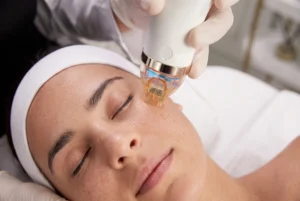
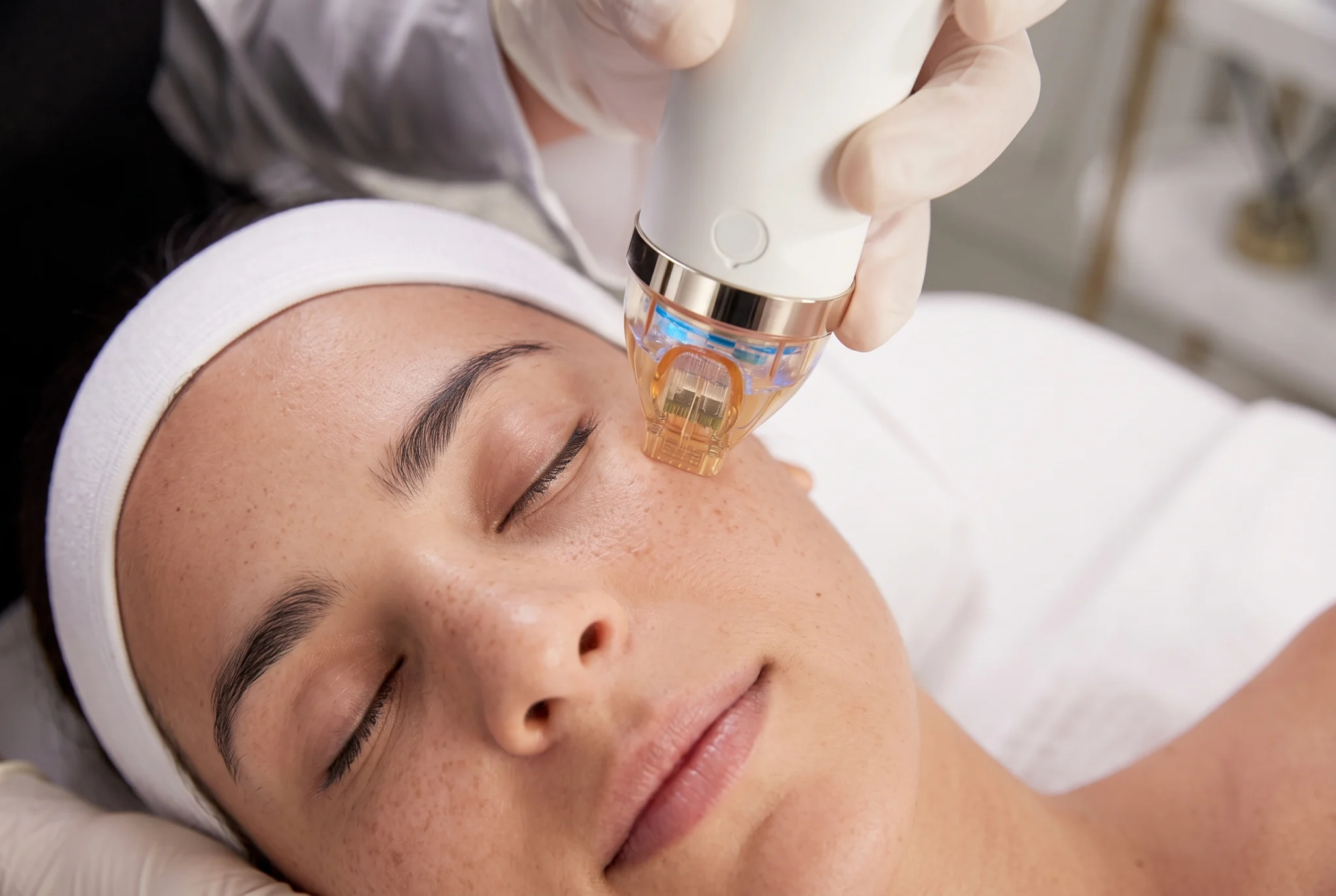
RF microneedling combines two forms of controlled injury in a single pass. Fine needles create micro-channels through the epidermis, and radiofrequency energy travels down those channels into the dermis, where it heats the deeper layers of skin in a precise, measured way. Your body reads that combined stimulus as a signal to repair and rebuild, and the fibroblasts responsible for producing collagen and elastin ramp up their activity for weeks afterward.
That timeline is the reason session spacing matters so much. Fresh collagen builds gradually across several weeks after each session as your body organizes new tissue in the treated area, with meaningful thickening beginning around the four-week mark and continuing well past the eight-week point. A session booked before that remodeling has run its course wastes the energy of the previous one, since the tissue has not yet stabilized enough to respond fully to a new stimulus.
The evidence for cumulative gains across a short series is clear. In a prospective clinical trial evaluating RF microneedling for periorbital wrinkles, twenty-four participants who completed four sessions showed a statistically significant 49 percent decrease in wrinkle severity by the three-month follow-up, with improvements observed across every skin type in the study (Journal of Cosmetic Dermatology, 2024).
How many RF microneedling sessions will you need?
Most clients reach their initial goals in three to four sessions. Some concerns respond in as few as two, and more established changes may benefit from five or six passes before the improvement plateaus. The count depends on how deep the concern sits in your skin, how long it has been developing, and how much correction you are aiming for.
Your provider maps that out during a consultation by reviewing your skin under bright light, feeling the texture across different zones, asking about the outcome that would count as a success for you, and factoring in any history you have with previous skin treatments. That conversation is where the count and cadence get set, and it usually gets adjusted along the way as your response becomes clearer.
How far apart should each RF microneedling session be?
The standard interval between RF microneedling sessions is four to six weeks. That window gives your skin enough time to finish the initial healing and lay down new collagen before absorbing the next round of stimulation.
A four-week spacing suits most facial treatments, particularly when the goal is smoother texture or softer fine lines. Six weeks is often more appropriate when the treatment reaches deeper layers, when the settings are more aggressive, or when you are pairing RF microneedling with other modalities in the same plan. Providers who work with Sylfirm X often lean toward the six-week end for pigment-focused concerns like melasma, since the tissue needs a longer runway to settle before the next pulsed-wave pass.
Does the concern being treated change how often you should book?
The concern you are treating shapes both the number of sessions and how they are spaced. The table below sets out typical protocols for the most common reasons clients pursue Sylfirm X RF microneedling in Abilene.
Primary concern | Typical series length | Spacing between sessions |
Fine lines and early wrinkles | 3 sessions | 4 weeks |
Established wrinkles and skin laxity | 3 to 4 sessions | 4 to 6 weeks |
Acne scarring | 4 to 6 sessions | 4 to 6 weeks |
Melasma and pigment concerns | 3 to 4 sessions | 6 weeks |
Rosacea and persistent redness | 3 to 4 sessions | 6 weeks |
Stretch marks (body) | 4 to 6 sessions | 6 to 8 weeks |
Overall skin quality and maintenance | 2 sessions | 6 weeks |
How often for acne scarring?
Acne scars sit deep in the dermis, and softening them means asking your body to rebuild collagen in specific, localized pockets over an extended period. That takes patience. Four to six sessions spaced four to six weeks apart is the working range, and results improve session by session as the pitted tissue gradually fills in from below. Many clients notice a real inflection point around the third or fourth session, which is often when the surface starts to look genuinely different rather than incrementally smoother.
How often for skin laxity and wrinkles?
Firming a jawline or softening deeper lines around the mouth and neck usually calls for three to four sessions at four to six week intervals. Because the continuous-wave setting on Sylfirm X reaches the lower dermis, the collagen remodeling that follows each session is substantial, and pushing sessions closer than four weeks can leave the tissue overstimulated rather than accelerated.
How often for melasma or rosacea?
Pigment and vascular concerns respond to the pulsed-wave mode, which targets abnormal tissue more selectively. Three to four sessions spaced six weeks apart is the common protocol, and the longer interval matters here. Melasma in particular has a tendency to rebound if the skin is pushed before it has fully calmed, so a slower cadence reduces the risk of triggering a flare while the treatment does its work.
How often for stretch marks and body treatment?
Body skin is thicker than facial skin and tends to remodel more slowly, so stretch mark protocols usually run four to six sessions with six to eight weeks between visits. That extended spacing gives the deeper tissue enough time to organize new collagen fibers in the previously stretched zones, which is where the actual improvement in texture and tone comes from.
What else influences how often you should book?
Beyond the concern itself, several personal factors shape the ideal cadence for your treatment series.
- Your age and general skin condition. Skin that has more collagen density to begin with often responds faster and may need fewer sessions to reach the same result.
- The intensity of the settings used during your session. Higher energy settings ask more of the skin per pass, and a longer recovery window between visits allows the tissue to reset properly.
Sun exposure, stress, sleep, and general health all quietly influence how efficiently your skin heals. A provider who reviews all of that during your consultation is in a much stronger position to build a schedule that reflects how your skin actually behaves rather than a generic protocol.
How often should you do RF microneedling for maintenance?
Once your initial series wraps up, results usually hold for about a year to eighteen months before the signs of aging begin to reassert themselves. Maintenance keeps the improvement you have earned rather than letting it drift, and the schedule is far lighter than the initial series.
For most clients, one to two maintenance sessions per year is enough to preserve firmness and the surface improvements you have gained. Clients with more advanced concerns or a preference for staying ahead of aging sometimes book quarterly touch-ups, particularly in the cooler months when treated skin is easier to protect from ultraviolet light. Some also pair their maintenance appointments with lighter services like a HydraFacial in Abilene between visits, which keeps the skin looking polished without adding downtime.
Good to know RF microneedling is one of the few skin treatments where results continue to improve for months after your last session. That is because the collagen response peaks around three to six months post-treatment, and the effect keeps deepening quietly during that window. If you are evaluating whether you need another session, waiting a full three months after your last one gives you a much clearer picture of what your skin has actually gained. |
Can you have RF microneedling too often?
Yes. Booking sessions closer than four weeks apart interrupts the healing cycle rather than accelerating it. When treated skin is stimulated before the previous round of remodeling has stabilized, the body responds with more inflammation and less new collagen, which is the opposite of what you want. Over-treating can also trigger prolonged redness or pigment changes, particularly in richer skin tones where the barrier is asked to do more.
A trained provider will pace your series to your skin, not to your calendar. If a follow-up visit reveals that the previous session is still actively producing collagen, the honest answer is often to wait another two to three weeks rather than press forward. That patience is part of what separates a good treatment plan from a fast one.
How can you make each session go further?
The habits between visits do more for your results than most clients expect. Sun protection sits at the top of the list, since new collagen forms best in skin that is not simultaneously coping with ultraviolet damage. Daily broad-spectrum SPF protects your investment more than any single product on the market.
The other lever is your consultation itself. Pairing RF microneedling with the right complementary services, such as SkinPen microneedling in Abilene for surface texture or chemical peels in Abilene between deeper sessions, can amplify the improvement without shortening the recovery window between RF visits. If you are still weighing which modality suits your primary concern, our SkinPen vs RF microneedling comparison breaks that decision down in detail.
For clients addressing sun damage that has settled beneath the surface, sequencing RF microneedling with laser skin resurfacing in Abilene across a longer plan often produces a more complete correction than either treatment on its own.
The short version Plan for three to four RF microneedling sessions spaced four to six weeks apart, then one to two maintenance sessions per year to preserve your results. Deeper concerns like acne scars or stretch marks may need a longer series with more spacing between visits, and pigment-focused protocols run at a slower cadence to protect the skin while it responds. |
Ready to build a plan that fits your skin?
The right frequency for RF microneedling is the one your skin actually needs, which is why an in-person consultation matters more than any online calculator. At Big Country Med Spa, our providers assess your goals and examine how your skin behaves, then build a schedule around your response rather than a fixed template. To map out your treatment plan, call 325-400-6830 or book a consultation with our Abilene team.