SkinPen vs RF Microneedling: Choosing the Right Treatment

skinpen microneedling

If you have been looking into ways to soften acne scars or smooth early wrinkles, two treatments tend to surface again and again: SkinPen microneedling and radiofrequency (RF) microneedling. Both rest on the same foundation, using very fine needles to prompt the skin into rebuilding itself. Where they part ways is what happens once those needles reach the dermis. SkinPen relies on the mechanical stimulus on its own. RF microneedling adds a second source of energy that reaches deeper and does more.

That single difference shapes almost everything else, from the concerns each treatment handles best to how your skin feels the next day. This guide walks through how the two work, where each one shines, and how to decide which belongs in your skincare plan.

What is microneedling, and how does it work?

Microneedling, also called collagen induction therapy, is a minimally invasive treatment that uses a device fitted with sterile, ultra-fine needles to create controlled micro-channels in the skin. Each tiny puncture registers with the body as an injury worth repairing, and that signal sets off a wound-healing response. The response floods the treated area with fresh collagen and elastin, the structural proteins that keep skin firm and resilient.

Results build over weeks rather than appearing overnight. As new collagen fills in, scars soften and rough texture begins to even out, while enlarged pores gradually look smaller. Because the treatment works with your own biology instead of stripping the skin from the surface, it suits a broad range of skin tones and generally involves modest recovery.

The evidence behind it is well documented. In one clinical study of 50 patients, four microneedling sessions spaced three weeks apart improved acne scarring across every severity grade measured, with roughly 73 percent of the most severe scars improving by two full grades on a standard scarring scale (Ghannam et al., 2019).

What is SkinPen microneedling?

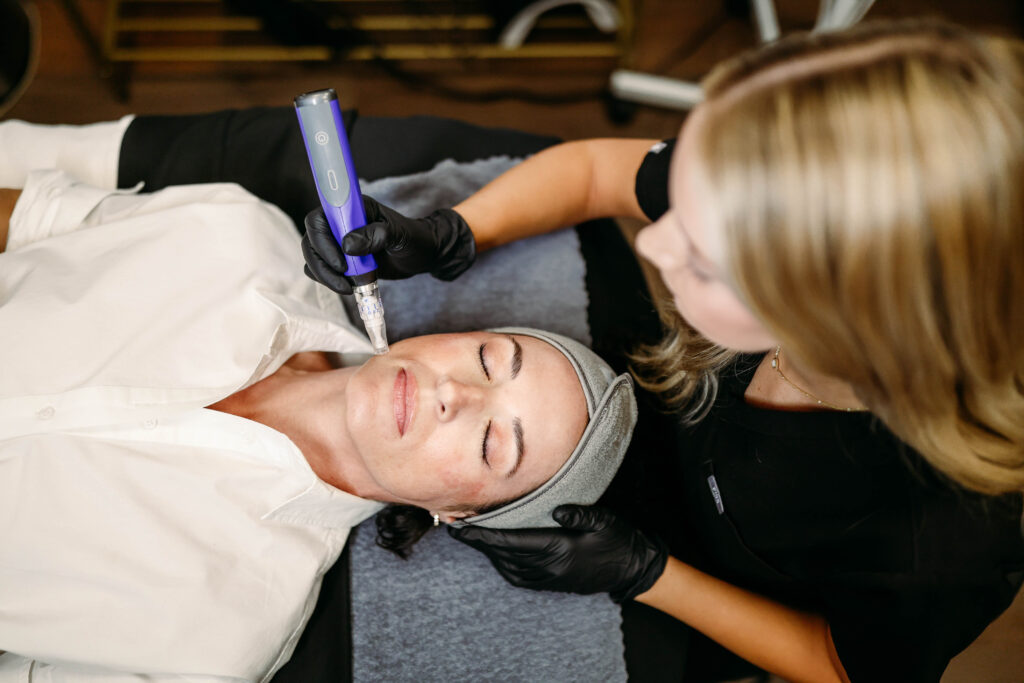
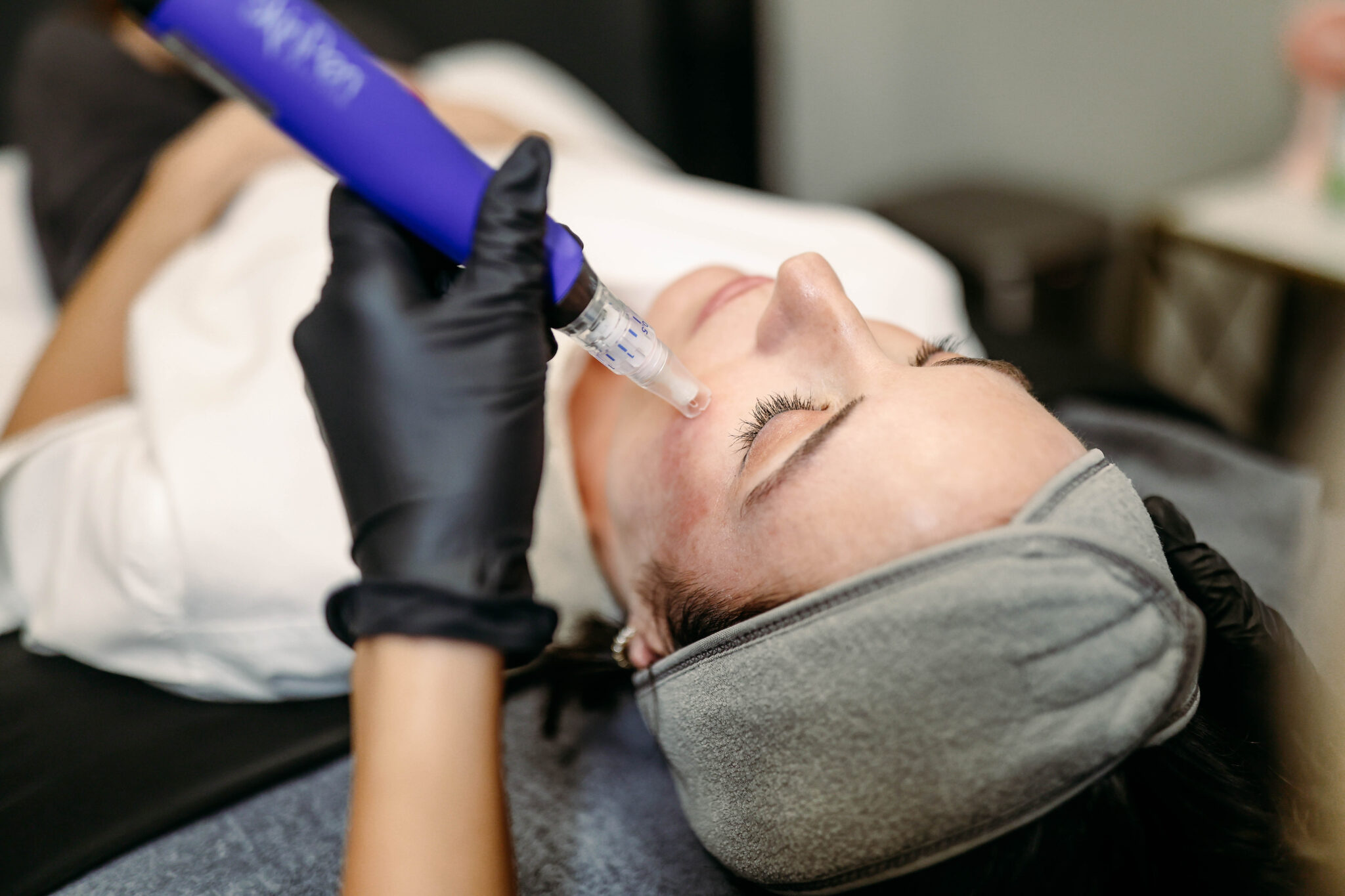
SkinPen is a mechanical microneedling device, and it holds the distinction of being the first such device cleared by the FDA. It uses a cartridge of ultra-fine needles that move in a rapid vertical motion, stamping thousands of precise micro-channels across the treatment area. A provider can adjust the needle depth in real time, treating delicate zones around the eyes more gently than the thicker skin of the cheeks or forehead.

On the safety side, SkinPen uses single-use, sterile cartridges, which rules out any risk of cross-contamination between clients. The treatment is a strong fit for acne scarring and the fine lines that come with early aging, and it works well on dull or uneven texture. Our team offers SkinPen microneedling in Abilene as a standalone session or as one layer of a broader skin-rejuvenation plan.

What is RF microneedling, and how is Sylfirm X different?

RF microneedling starts with that same needle-based stimulus, then delivers radiofrequency energy straight into the dermis through the needles themselves. The RF energy heats the deeper layers of skin in a controlled way, and that heat drives a more pronounced round of collagen remodeling and tissue tightening than needles can achieve alone. The mechanical channels and the thermal energy reinforce each other.

At Big Country Med Spa, our RF platform is Sylfirm X, the first device cleared by the FDA to use both pulsed-wave and continuous-wave radiofrequency. The two modes handle separate jobs. The pulsed-wave setting targets abnormal tissue such as the redness of rosacea or the stubborn pigment of melasma, while the continuous-wave setting concentrates on firming and deeper collagen remodeling. That dual capability is why Sylfirm X RF microneedling in Abilene can reach vascular and pigment concerns that traditional microneedling often leaves behind. It is also cleared as safe for all skin tones, including deeper complexions that are poor candidates for many lasers.

Good to know

Radiofrequency is chromophore-independent, meaning it does not rely on pigment to work. This is a large part of why RF microneedling carries a lower risk of pigment changes in richer skin tones than heat-based laser resurfacing, and why it has become a go-to for melasma and rosacea.

How do SkinPen and RF microneedling compare?

The table below sets the two treatments side by side across the factors that tend to matter most during a consultation.

Feature SkinPen Microneedling Sylfirm X RF Microneedling
Core mechanism Mechanical micro-channels Micro-channels plus radiofrequency heat
Depth of action Upper and mid dermis Deeper dermis, reached through RF energy
Best-suited concerns Acne scars, fine lines, texture, pores Skin laxity, deeper wrinkles, melasma, rosacea, redness
FDA milestone First FDA-cleared microneedling device First dual-wave RF microneedling device
Session length About 30 to 45 minutes About 30 to 60 minutes
Typical series 3 to 6 sessions, 4 weeks apart 3 to 4 sessions, 4 to 6 weeks apart
Downtime Redness for about 24 hours Flushing for 24 to 48 hours
Skin tone range All skin tones All skin tones, strong for pigment concerns

Which skin concerns does each treatment address best?

Both devices improve overall skin quality, so there is real overlap. The clearest way to choose is to lead with your primary concern and let that point you toward the better tool.

When is SkinPen the right call?

SkinPen is a workhorse for surface-level and mid-depth concerns. It performs beautifully on acne scarring, fine lines, congested pores, and the general loss of glow that comes with time. For younger skin or maintenance work, it often delivers what you need without stepping up to added heat. It also layers cleanly with other services, so many clients pair it with a chemical peel treatment or a HydraFacial to amplify brightness and smoothness.

When is Sylfirm X the right call?

Sylfirm X earns its place when concerns run deeper or involve color. Because the radiofrequency energy reaches the lower dermis, it is the stronger option for meaningful skin laxity, more established wrinkles, and crepey texture. Its pulsed-wave mode also gives it an edge on melasma, rosacea, and persistent facial redness, which mechanical microneedling alone rarely resolves. For sun damage that has settled into deeper layers, some clients combine it with laser skin resurfacing in Abilene for a more complete correction.

Does microneedling hurt?

Comfort is one of the most common questions, and the honest answer is that most people tolerate both treatments well. Before either session begins, your provider applies a topical numbing cream and lets it take full effect, which softens the sensation considerably. With SkinPen, clients often describe a light scratching or a mild vibration as the device passes over the skin. With Sylfirm X, the added radiofrequency brings a warm, prickling feeling alongside the needling. Sensitive spots like the forehead or upper lip can register more, though the passes are quick and any discomfort settles as soon as the session ends.

What does recovery look like for each treatment?

Recovery is comfortable and short for both, though RF microneedling asks for a little more patience. After SkinPen, your skin looks pink and feels warm, similar to a moderate sunburn, and that calms within about 24 hours. Most people return to their normal routine the next day, keeping makeup off for a full day and staying diligent with sun protection.

After Sylfirm X, the flushed, warm feeling is comparable but can linger for 24 to 48 hours, and some clients notice light peeling or mild swelling as the skin renews. In both cases, the aftercare that protects your results is simple, and it comes down to two habits worth honoring:

  • Shield the treated skin from direct sun and apply broad-spectrum SPF daily while collagen rebuilds.
  • Pause active ingredients such as retinol and exfoliating acids for a few days so the skin barrier can settle.

How long do the results last?

Because both treatments work by prompting your own collagen to rebuild, the improvements they create are gradual and long-lasting rather than instant. After a full series, most clients enjoy their results for roughly a year, though skin continues to age, so periodic maintenance keeps things looking their best. SkinPen results often hold well with a touch-up session every few months, while the deeper remodeling from Sylfirm X can extend the interval between visits. Your daily skincare and sun habits play a meaningful role too, since consistent protection preserves the new collagen you have worked to build.

How do you choose between them?

The decision usually comes down to depth and color. If your main goals sit at the surface, such as refining texture, softening early lines, or fading acne scars, SkinPen is an efficient and cost-effective way to get there. If you are working against sagging skin, deeper wrinkles, or pigment and redness that have resisted other approaches, the added radiofrequency energy of Sylfirm X gives you more reach.

Budget, downtime tolerance, and skin tone all factor in as well. During a consultation, a provider examines your skin, listens to your priorities, and often finds that the right answer is a sequence rather than a single choice. Many clients begin with one treatment to address their leading concern, then add the other later to round out their results.

The short version

Reach for SkinPen when the goal is smoother texture, fewer fine lines, or fading acne scars at the surface.

Reach for Sylfirm X when you want firmer skin, correction of deeper wrinkles, or relief from melasma, rosacea, and redness that go beyond what needles alone can treat.

Can these treatments work together?

They can, and pairing them thoughtfully is common. Because SkinPen and Sylfirm X operate at different depths, a provider can stage them over a treatment plan so that surface concerns and deeper structural changes are both addressed. The key is spacing and sequencing, which is why a professional assessment matters more than any online comparison. Your provider will map a timeline that lets your skin recover fully between sessions while keeping momentum on your goals.

Ready to find your match?

Choosing between SkinPen and RF microneedling is far easier once a trained provider has looked at your skin in person. At Big Country Med Spa, every treatment plan is built around your concerns rather than a fixed template, and our team serves the Abilene community with the kind of attentive, unhurried care that gets results. To talk through your options and build a plan that fits, call us at 325-400-6830 or book a consultation today.

References

Ghannam S, et al. Efficacy of Micro-needling on Post Acne Scars. Journal of Ayub Medical College Abbottabad, 2019. https://pubmed.ncbi.nlm.nih.gov/31535501/

Ellis E, et al. Radiofrequency Microneedling: Technology, Devices, and Indications in the Modern Plastic Surgery Practice. Aesthetic Surgery Journal Open Forum, 2023. https://academic.oup.com/asjopenforum/article/doi/10.1093/asjof/ojad100/7367886

Microneedling in Dermatology: A Comprehensive Review of Applications, Techniques, and Outcomes. PMC, 2024. https://www.ncbi.nlm.nih.gov/pmc/articles/PMC11499218/
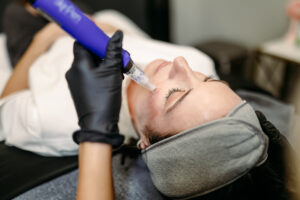
Table of Contents
Get In Touch
Table of Contents

If you have been looking into ways to soften acne scars or smooth early wrinkles, two treatments tend to surface again and again: SkinPen microneedling and radiofrequency (RF) microneedling. Both rest on the same foundation, using very fine needles to prompt the skin into rebuilding itself. Where they part ways is what happens once those needles reach the dermis. SkinPen relies on the mechanical stimulus on its own. RF microneedling adds a second source of energy that reaches deeper and does more.

That single difference shapes almost everything else, from the concerns each treatment handles best to how your skin feels the next day. This guide walks through how the two work, where each one shines, and how to decide which belongs in your skincare plan.

What is microneedling, and how does it work?

Microneedling, also called collagen induction therapy, is a minimally invasive treatment that uses a device fitted with sterile, ultra-fine needles to create controlled micro-channels in the skin. Each tiny puncture registers with the body as an injury worth repairing, and that signal sets off a wound-healing response. The response floods the treated area with fresh collagen and elastin, the structural proteins that keep skin firm and resilient.

Results build over weeks rather than appearing overnight. As new collagen fills in, scars soften and rough texture begins to even out, while enlarged pores gradually look smaller. Because the treatment works with your own biology instead of stripping the skin from the surface, it suits a broad range of skin tones and generally involves modest recovery.

The evidence behind it is well documented. In one clinical study of 50 patients, four microneedling sessions spaced three weeks apart improved acne scarring across every severity grade measured, with roughly 73 percent of the most severe scars improving by two full grades on a standard scarring scale (Ghannam et al., 2019).

What is SkinPen microneedling?

SkinPen is a mechanical microneedling device, and it holds the distinction of being the first such device cleared by the FDA. It uses a cartridge of ultra-fine needles that move in a rapid vertical motion, stamping thousands of precise micro-channels across the treatment area. A provider can adjust the needle depth in real time, treating delicate zones around the eyes more gently than the thicker skin of the cheeks or forehead.

On the safety side, SkinPen uses single-use, sterile cartridges, which rules out any risk of cross-contamination between clients. The treatment is a strong fit for acne scarring and the fine lines that come with early aging, and it works well on dull or uneven texture. Our team offers SkinPen microneedling in Abilene as a standalone session or as one layer of a broader skin-rejuvenation plan.

What is RF microneedling, and how is Sylfirm X different?

RF microneedling starts with that same needle-based stimulus, then delivers radiofrequency energy straight into the dermis through the needles themselves. The RF energy heats the deeper layers of skin in a controlled way, and that heat drives a more pronounced round of collagen remodeling and tissue tightening than needles can achieve alone. The mechanical channels and the thermal energy reinforce each other.

At Big Country Med Spa, our RF platform is Sylfirm X, the first device cleared by the FDA to use both pulsed-wave and continuous-wave radiofrequency. The two modes handle separate jobs. The pulsed-wave setting targets abnormal tissue such as the redness of rosacea or the stubborn pigment of melasma, while the continuous-wave setting concentrates on firming and deeper collagen remodeling. That dual capability is why Sylfirm X RF microneedling in Abilene can reach vascular and pigment concerns that traditional microneedling often leaves behind. It is also cleared as safe for all skin tones, including deeper complexions that are poor candidates for many lasers.

Good to know

Radiofrequency is chromophore-independent, meaning it does not rely on pigment to work. This is a large part of why RF microneedling carries a lower risk of pigment changes in richer skin tones than heat-based laser resurfacing, and why it has become a go-to for melasma and rosacea.

How do SkinPen and RF microneedling compare?

The table below sets the two treatments side by side across the factors that tend to matter most during a consultation.

Feature SkinPen Microneedling Sylfirm X RF Microneedling
Core mechanism Mechanical micro-channels Micro-channels plus radiofrequency heat
Depth of action Upper and mid dermis Deeper dermis, reached through RF energy
Best-suited concerns Acne scars, fine lines, texture, pores Skin laxity, deeper wrinkles, melasma, rosacea, redness
FDA milestone First FDA-cleared microneedling device First dual-wave RF microneedling device
Session length About 30 to 45 minutes About 30 to 60 minutes
Typical series 3 to 6 sessions, 4 weeks apart 3 to 4 sessions, 4 to 6 weeks apart
Downtime Redness for about 24 hours Flushing for 24 to 48 hours
Skin tone range All skin tones All skin tones, strong for pigment concerns

Which skin concerns does each treatment address best?

Both devices improve overall skin quality, so there is real overlap. The clearest way to choose is to lead with your primary concern and let that point you toward the better tool.

When is SkinPen the right call?

SkinPen is a workhorse for surface-level and mid-depth concerns. It performs beautifully on acne scarring, fine lines, congested pores, and the general loss of glow that comes with time. For younger skin or maintenance work, it often delivers what you need without stepping up to added heat. It also layers cleanly with other services, so many clients pair it with a chemical peel treatment or a HydraFacial to amplify brightness and smoothness.

When is Sylfirm X the right call?

Sylfirm X earns its place when concerns run deeper or involve color. Because the radiofrequency energy reaches the lower dermis, it is the stronger option for meaningful skin laxity, more established wrinkles, and crepey texture. Its pulsed-wave mode also gives it an edge on melasma, rosacea, and persistent facial redness, which mechanical microneedling alone rarely resolves. For sun damage that has settled into deeper layers, some clients combine it with laser skin resurfacing in Abilene for a more complete correction.

Does microneedling hurt?

Comfort is one of the most common questions, and the honest answer is that most people tolerate both treatments well. Before either session begins, your provider applies a topical numbing cream and lets it take full effect, which softens the sensation considerably. With SkinPen, clients often describe a light scratching or a mild vibration as the device passes over the skin. With Sylfirm X, the added radiofrequency brings a warm, prickling feeling alongside the needling. Sensitive spots like the forehead or upper lip can register more, though the passes are quick and any discomfort settles as soon as the session ends.

What does recovery look like for each treatment?

Recovery is comfortable and short for both, though RF microneedling asks for a little more patience. After SkinPen, your skin looks pink and feels warm, similar to a moderate sunburn, and that calms within about 24 hours. Most people return to their normal routine the next day, keeping makeup off for a full day and staying diligent with sun protection.

After Sylfirm X, the flushed, warm feeling is comparable but can linger for 24 to 48 hours, and some clients notice light peeling or mild swelling as the skin renews. In both cases, the aftercare that protects your results is simple, and it comes down to two habits worth honoring:

  • Shield the treated skin from direct sun and apply broad-spectrum SPF daily while collagen rebuilds.
  • Pause active ingredients such as retinol and exfoliating acids for a few days so the skin barrier can settle.

How long do the results last?

Because both treatments work by prompting your own collagen to rebuild, the improvements they create are gradual and long-lasting rather than instant. After a full series, most clients enjoy their results for roughly a year, though skin continues to age, so periodic maintenance keeps things looking their best. SkinPen results often hold well with a touch-up session every few months, while the deeper remodeling from Sylfirm X can extend the interval between visits. Your daily skincare and sun habits play a meaningful role too, since consistent protection preserves the new collagen you have worked to build.

How do you choose between them?

The decision usually comes down to depth and color. If your main goals sit at the surface, such as refining texture, softening early lines, or fading acne scars, SkinPen is an efficient and cost-effective way to get there. If you are working against sagging skin, deeper wrinkles, or pigment and redness that have resisted other approaches, the added radiofrequency energy of Sylfirm X gives you more reach.

Budget, downtime tolerance, and skin tone all factor in as well. During a consultation, a provider examines your skin, listens to your priorities, and often finds that the right answer is a sequence rather than a single choice. Many clients begin with one treatment to address their leading concern, then add the other later to round out their results.

The short version

Reach for SkinPen when the goal is smoother texture, fewer fine lines, or fading acne scars at the surface.

Reach for Sylfirm X when you want firmer skin, correction of deeper wrinkles, or relief from melasma, rosacea, and redness that go beyond what needles alone can treat.

Can these treatments work together?

They can, and pairing them thoughtfully is common. Because SkinPen and Sylfirm X operate at different depths, a provider can stage them over a treatment plan so that surface concerns and deeper structural changes are both addressed. The key is spacing and sequencing, which is why a professional assessment matters more than any online comparison. Your provider will map a timeline that lets your skin recover fully between sessions while keeping momentum on your goals.

Ready to find your match?

Choosing between SkinPen and RF microneedling is far easier once a trained provider has looked at your skin in person. At Big Country Med Spa, every treatment plan is built around your concerns rather than a fixed template, and our team serves the Abilene community with the kind of attentive, unhurried care that gets results. To talk through your options and build a plan that fits, call us at 325-400-6830 or book a consultation today.

References

Ghannam S, et al. Efficacy of Micro-needling on Post Acne Scars. Journal of Ayub Medical College Abbottabad, 2019. https://pubmed.ncbi.nlm.nih.gov/31535501/

Ellis E, et al. Radiofrequency Microneedling: Technology, Devices, and Indications in the Modern Plastic Surgery Practice. Aesthetic Surgery Journal Open Forum, 2023. https://academic.oup.com/asjopenforum/article/doi/10.1093/asjof/ojad100/7367886

Microneedling in Dermatology: A Comprehensive Review of Applications, Techniques, and Outcomes. PMC, 2024. https://www.ncbi.nlm.nih.gov/pmc/articles/PMC11499218/


Get In Touch

Read More

Recent Insights

botox treatment

Do You Tip for Botox at a Med Spa?

Is tipping for Botox expected or optional? Get the definitive guide on med spa etiquette, standard tipping rates, and how to handle gratuity when your injector is a licensed medical professional.

Read More »
Massage in Abilene

What Toxins are Released after Massage?

A great massage melts away tension, but it can also leave you feeling a little sore or emotionally drained. Why? It’s all about detoxification. Uncover the physical and emotional “toxins” released during a massage, and learn the best ways to help your body recover and rehydrate.

Read More »