
Botox vs. Dysport: Which Lasts Longer?

botox vs dysport

Anyone who has had a neuromodulator treatment knows the moment. A few months after the appointment, the line between the brows starts creeping back during a long meeting, and the smooth forehead you enjoyed begins to move again. That gradual return of movement is completely normal, and it often leads to the same question at the next visit: would the other product have lasted longer?

Botox and Dysport are the two best-known neuromodulators in American aesthetic medicine, and they have far more in common than the brand rivalry suggests. Both typically hold for three to four months. Some head-to-head research gives Dysport a modest edge in longevity when the two are dosed at standard conversion ratios, though dosing and muscle strength shape your result far more than the name on the vial. This guide walks through what the clinical evidence shows and explains how our Abilene team decides which product suits your face.

What are Botox and Dysport?

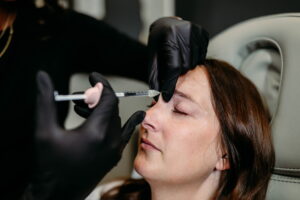
Botox Cosmetic and Dysport are prescription injectables made from botulinum toxin type A, a purified protein that temporarily relaxes the muscle it is placed in. Clinicians group them under the term neuromodulators, and both are approved by the U.S. Food and Drug Administration (FDA) for cosmetic use when administered by a licensed medical provider.

Botox Cosmetic, known by the nonproprietary name onabotulinumtoxinA, is manufactured by Allergan Aesthetics, an AbbVie company. The FDA approved it for frown lines between the brows in 2002. Its cosmetic label now also covers crow’s feet and forehead lines, and in 2024 it gained approval for vertical bands on the neck. Dysport, or abobotulinumtoxinA, was developed by the French pharmaceutical company Ipsen and approved for frown lines in the United States in 2009, where Galderma markets it for aesthetic use. Our team offers both, and our page on Botox and Dysport in Abilene covers the full range of areas we treat.

How do neuromodulators relax a muscle?

Every muscle contraction begins with a chemical messenger called acetylcholine, which travels from a nerve ending into the muscle fiber. Both products temporarily block the release of that messenger in the treated area. With the signal muted, the muscle contracts less forcefully and the skin above it stops folding into the same creases thousands of times a day.

The effect fades gradually as the nerve ending forms new connections and restores normal signaling. That recovery process sets the clock for every neuromodulator treatment, and it explains why results from any product on the market are temporary.

If they share an active ingredient, what sets them apart?

Both products are built around the same core molecule, a 150-kilodalton neurotoxin that does the actual work of relaxing the muscle. The differences come from manufacturing. Each company follows its own purification process and surrounds the core toxin with a different complex of accessory proteins, so the finished products behave a little differently once injected.

Units are the other major distinction. Each manufacturer measures potency with its own proprietary test, which means a Dysport unit and a Botox unit represent different amounts of activity. Injectors typically use about 2.5 to 3 units of Dysport for every unit of Botox. A Dysport treatment will show a larger number on your chart, and that number reflects a separate measuring system rather than a stronger dose.

Which one lasts longer, Botox or Dysport?

For most people, the two last about the same amount of time. Both soften movement for roughly three to four months in typical patients, and a good share of clients see results stretch past that window, particularly after several consistent rounds of treatment.

Where controlled research does show a gap, it has more often favored Dysport. In a randomized, double-blind study that treated one side of each participant’s forehead with Dysport and the other side with Botox at a 2.5 to 1 dose ratio, the median duration of full effect, measured by forehead muscle activity, was 103 days on the Dysport side compared with 87 days on the Botox side (Journal of Clinical and Aesthetic Dermatology, 2011).

That difference of roughly two weeks is meaningful, and it comes with context. The study was small, with every participant treated in the same forehead muscle, and its outcome depended heavily on the conversion ratio the researchers chose. Other comparisons using different ratios or different treatment areas have reported little or no difference between the two, and at least one found that the patient’s sex predicted duration more strongly than the product did. A laboratory analysis published in Toxins in 2018 offered a possible explanation for the studies that favor Dysport, finding that its approved doses deliver a greater quantity of the core neurotoxin. Several of the studies favoring Dysport were funded by companies involved in making or distributing it, a detail worth weighing alongside the findings.

Good to know

The amount of product placed in a muscle influences longevity more than the brand name does. An underdosed treatment with either neuromodulator will fade early, while a well-dosed treatment with either one can comfortably reach the three-to-four-month mark. If your results seem short, the first conversation worth having with your injector is about dose.

How quickly does each one take effect?

Speed of onset is the other area where Dysport often pulls slightly ahead. Many patients notice Dysport starting to work within two to three days, while Botox more commonly begins softening movement somewhere between day three and day five. Split-face comparisons have found the same pattern, with Dysport arriving a little sooner on average.

Full results take about two weeks with either product, which is when we like to see clients for a follow-up assessment. If you have a wedding or another big event coming up, book your appointment at least two weeks ahead regardless of which product you choose.

How do Botox and Dysport compare side by side?

The table below summarizes the practical differences clients ask about most often during a consultation.

Feature Botox Cosmetic Dysport
Nonproprietary name onabotulinumtoxinA abobotulinumtoxinA
Manufacturer Allergan Aesthetics (AbbVie) Ipsen, marketed in the U.S. by Galderma
First U.S. cosmetic approval 2002 2009
FDA-approved cosmetic areas Frown lines, crow's feet, forehead lines, neck bands Frown lines
Typical onset 3 to 5 days 2 to 3 days
Full results About 2 weeks About 2 weeks
Typical duration 3 to 4 months 3 to 4 months, sometimes slightly longer
Units relative to Botox Reference standard About 2.5 to 3 units per Botox unit
Spread after injection More contained Slightly broader field of effect
Often favored for Small, precise zones such as crow's feet and the lip flip Larger muscles such as the forehead

Both products are routinely used in facial areas beyond their FDA-approved indications. This practice, known as off-label use, is common and well accepted in aesthetic medicine when performed by trained providers.

Does Dysport’s spread affect how long it lasts?

Dysport is often described as having a slightly wider field of effect, meaning each injection point softens a broader patch of muscle. Part of this comes from preparation, since Dysport is frequently mixed with a larger volume of saline. Researchers still debate how much of the difference belongs to the product itself and how much to dilution and injection technique.

Spread influences coverage more than duration. On a wide muscle like the frontalis, which raises the brows and creates horizontal forehead lines, a broader field can produce a smooth, even result with fewer injection points. Around the eyes and mouth, where neighboring muscles sit close together, many injectors prefer the tighter placement of Botox so that only the intended muscle relaxes. For longevity, the best choice is the product that covers the target muscle fully, because any untreated fibers will start pulling the skin back into a crease sooner.

What makes neuromodulator results last longer or fade sooner?

A handful of factors shape how long a treatment holds, and they apply equally to both products.

  • Dose relative to muscle strength. Stronger muscles need more product to stay relaxed. Men usually have greater facial muscle mass and often need higher doses to reach the same duration as women.
  • Treatment area. Small doses placed in very active muscles, such as those around the lips, wear through sooner than full doses in the frown or forehead muscles.
  • Consistency over time. Clients who return on a regular schedule often find their results last longer, because a muscle that is repeatedly relaxed gradually weakens. Many need fewer units after a year or two of steady treatment.
  • Individual metabolism. Some providers observe shorter results in very athletic patients, though published research on this effect remains limited.

Does the treatment area change how long results last?

Location often affects longevity more than the choice of product. Frown lines between the brows and horizontal forehead lines usually follow the standard three-to-four-month pattern. Crow’s feet behave similarly, though people who smile and squint frequently may notice movement returning a little earlier.

The lip flip sits at the short end of the range. It uses only a few units in a muscle that moves with every word and every sip, so results commonly last six to eight weeks. Clients who want a longer-lasting change to the lips often add or switch to dermal fillers in Abilene, which restore volume directly and hold for months.

At the other end, treatments for jaw clenching and excessive underarm sweating frequently outlast facial treatments, with many patients reporting four to six months or more. These areas call for larger doses and follow a different timeline from cosmetic smoothing.

How do you choose between Botox and Dysport?

Because longevity is so similar, the decision usually turns on other details. Your provider will study the strength of the muscles involved and the pattern of your lines. Your history with neuromodulators matters too, since a past response is one of the better predictors of the next one.

A practical approach for many clients is to start with one product and note the date when movement begins returning. At the next visit, an equivalent dose of the other product gives you a direct comparison on your own face, which is better evidence than any clinical average. Some clients find a clear favorite, while others notice no difference and stay with the product they started with.

If this will be your first appointment, your provider will walk you through the plan before any injection takes place. Our guide on whether you should tip for Botox at a med spa answers the etiquette questions first-time clients often wonder about.

How often should you schedule your next appointment?

Most clients rebook every three to four months, timed to the point when movement first begins returning. Treating at that stage helps maintain the gradual muscle weakening that allows later treatments to last longer. Both manufacturers advise against treating the same area more often than every three months, and our providers follow that guidance.

Neuromodulators are an ongoing part of many clients’ routines, so it helps to plan for the cost. Our med spa memberships and flexible payment plans make regular appointments easier to budget across the year.

How can you protect your results after treatment?

Proper placement is the foundation of a full-length result, and two simple habits in the first day help the product stay where your provider put it:

  • Stay upright for at least four hours and avoid rubbing or massaging the treated areas for the rest of the day.
  • Skip strenuous workouts until the following day, and wait a full week before booking a facial treatment or a microneedling session.

Can other treatments extend your overall results?

Neuromodulators work on dynamic lines, the creases that appear with movement. Lines that remain visible when your face is completely at rest have usually become etched into the skin, and they respond better to treatments that rebuild collagen. SkinPen microneedling in Abilene and laser skin resurfacing in Abilene both strengthen the skin itself, so the surface stays smoother even as your neuromodulator wears off between visits.

Volume loss is the other piece of facial aging. When hollowing in the cheeks or temples is part of the picture, Sculptra and Radiesse in Abilene restore structure that a muscle relaxer cannot provide. A combined plan, spaced correctly, keeps your face looking consistent across the full cycle between appointments.

The short version

Botox and Dysport both typically last three to four months. Some head-to-head research shows Dysport holding slightly longer and taking effect a little sooner, though the gap is small and depends heavily on dosing. A well-dosed treatment on a consistent schedule will do more for longevity than choosing one brand over the other.

What do clients ask most about Botox and Dysport?

Can you switch between Botox and Dysport?

Yes. Both contain the same type of active neurotoxin, and switching between them is common and safe under the guidance of a licensed provider. Your injector converts the dose so the strength of your treatment stays consistent.

This is uncommon. A small number of people develop antibodies that reduce their response over time, a risk linked mainly to very high or very frequent dosing. Respecting the three-month minimum interval helps keep that risk low. If a treatment seems to wear off unusually fast, your provider will review dose and placement before considering a product change.

Dysport is usually priced lower per unit, and a treatment uses more units to reach the same effect. The total cost of equivalent treatments therefore tends to land in a similar range.

Many clients find that they do. Regular treatment gradually weakens the target muscle, and after several cycles some people can stretch the time between appointments or reach the same result with fewer units.

Ready to find the neuromodulator that lasts for you?

The most reliable way to learn which product lasts longest on your face is to start with an expert assessment and track your own results from one visit to the next. At Big Country Med Spa, our licensed providers evaluate how your muscles move and build a dose around your goals, giving either product the best chance of reaching its full duration. To plan your treatment, call 325-400-6830 or book a consultation with our Abilene team at 2301 Industrial Blvd., open Monday through Saturday.

References

Nestor MS, Ablon GR. Duration of Action of AbobotulinumtoxinA and OnabotulinumtoxinA: A Randomized, Double-blind Study Using a Contralateral Frontalis Model. Journal of Clinical and Aesthetic Dermatology, 2011. https://pmc.ncbi.nlm.nih.gov/articles/PMC3175804/

Field M, et al. AbobotulinumtoxinA (Dysport), OnabotulinumtoxinA (Botox), and IncobotulinumtoxinA (Xeomin) Neurotoxin Content and Potential Implications for Duration of Response in Patients. Toxins, 2018. https://pmc.ncbi.nlm.nih.gov/articles/PMC6316182/

Nestor M, et al. Onset and Duration of AbobotulinumtoxinA for Aesthetic Use in the Upper Face: A Systematic Literature Review. Journal of Clinical and Aesthetic Dermatology, 2020. https://pmc.ncbi.nlm.nih.gov/articles/PMC7819591/

Table of Contents
Get In Touch
Table of Contents

Anyone who has had a neuromodulator treatment knows the moment. A few months after the appointment, the line between the brows starts creeping back during a long meeting, and the smooth forehead you enjoyed begins to move again. That gradual return of movement is completely normal, and it often leads to the same question at the next visit: would the other product have lasted longer?

Botox and Dysport are the two best-known neuromodulators in American aesthetic medicine, and they have far more in common than the brand rivalry suggests. Both typically hold for three to four months. Some head-to-head research gives Dysport a modest edge in longevity when the two are dosed at standard conversion ratios, though dosing and muscle strength shape your result far more than the name on the vial. This guide walks through what the clinical evidence shows and explains how our Abilene team decides which product suits your face.

What are Botox and Dysport?

Botox Cosmetic and Dysport are prescription injectables made from botulinum toxin type A, a purified protein that temporarily relaxes the muscle it is placed in. Clinicians group them under the term neuromodulators, and both are approved by the U.S. Food and Drug Administration (FDA) for cosmetic use when administered by a licensed medical provider.

Botox Cosmetic, known by the nonproprietary name onabotulinumtoxinA, is manufactured by Allergan Aesthetics, an AbbVie company. The FDA approved it for frown lines between the brows in 2002. Its cosmetic label now also covers crow’s feet and forehead lines, and in 2024 it gained approval for vertical bands on the neck. Dysport, or abobotulinumtoxinA, was developed by the French pharmaceutical company Ipsen and approved for frown lines in the United States in 2009, where Galderma markets it for aesthetic use. Our team offers both, and our page on Botox and Dysport in Abilene covers the full range of areas we treat.

How do neuromodulators relax a muscle?

Every muscle contraction begins with a chemical messenger called acetylcholine, which travels from a nerve ending into the muscle fiber. Both products temporarily block the release of that messenger in the treated area. With the signal muted, the muscle contracts less forcefully and the skin above it stops folding into the same creases thousands of times a day.

The effect fades gradually as the nerve ending forms new connections and restores normal signaling. That recovery process sets the clock for every neuromodulator treatment, and it explains why results from any product on the market are temporary.

If they share an active ingredient, what sets them apart?

Both products are built around the same core molecule, a 150-kilodalton neurotoxin that does the actual work of relaxing the muscle. The differences come from manufacturing. Each company follows its own purification process and surrounds the core toxin with a different complex of accessory proteins, so the finished products behave a little differently once injected.

Units are the other major distinction. Each manufacturer measures potency with its own proprietary test, which means a Dysport unit and a Botox unit represent different amounts of activity. Injectors typically use about 2.5 to 3 units of Dysport for every unit of Botox. A Dysport treatment will show a larger number on your chart, and that number reflects a separate measuring system rather than a stronger dose.

Which one lasts longer, Botox or Dysport?

For most people, the two last about the same amount of time. Both soften movement for roughly three to four months in typical patients, and a good share of clients see results stretch past that window, particularly after several consistent rounds of treatment.

Where controlled research does show a gap, it has more often favored Dysport. In a randomized, double-blind study that treated one side of each participant’s forehead with Dysport and the other side with Botox at a 2.5 to 1 dose ratio, the median duration of full effect, measured by forehead muscle activity, was 103 days on the Dysport side compared with 87 days on the Botox side (Journal of Clinical and Aesthetic Dermatology, 2011).

That difference of roughly two weeks is meaningful, and it comes with context. The study was small, with every participant treated in the same forehead muscle, and its outcome depended heavily on the conversion ratio the researchers chose. Other comparisons using different ratios or different treatment areas have reported little or no difference between the two, and at least one found that the patient’s sex predicted duration more strongly than the product did. A laboratory analysis published in Toxins in 2018 offered a possible explanation for the studies that favor Dysport, finding that its approved doses deliver a greater quantity of the core neurotoxin. Several of the studies favoring Dysport were funded by companies involved in making or distributing it, a detail worth weighing alongside the findings.

Good to know

The amount of product placed in a muscle influences longevity more than the brand name does. An underdosed treatment with either neuromodulator will fade early, while a well-dosed treatment with either one can comfortably reach the three-to-four-month mark. If your results seem short, the first conversation worth having with your injector is about dose.

How quickly does each one take effect?

Speed of onset is the other area where Dysport often pulls slightly ahead. Many patients notice Dysport starting to work within two to three days, while Botox more commonly begins softening movement somewhere between day three and day five. Split-face comparisons have found the same pattern, with Dysport arriving a little sooner on average.

Full results take about two weeks with either product, which is when we like to see clients for a follow-up assessment. If you have a wedding or another big event coming up, book your appointment at least two weeks ahead regardless of which product you choose.

How do Botox and Dysport compare side by side?

The table below summarizes the practical differences clients ask about most often during a consultation.

Feature Botox Cosmetic Dysport
Nonproprietary name onabotulinumtoxinA abobotulinumtoxinA
Manufacturer Allergan Aesthetics (AbbVie) Ipsen, marketed in the U.S. by Galderma
First U.S. cosmetic approval 2002 2009
FDA-approved cosmetic areas Frown lines, crow's feet, forehead lines, neck bands Frown lines
Typical onset 3 to 5 days 2 to 3 days
Full results About 2 weeks About 2 weeks
Typical duration 3 to 4 months 3 to 4 months, sometimes slightly longer
Units relative to Botox Reference standard About 2.5 to 3 units per Botox unit
Spread after injection More contained Slightly broader field of effect
Often favored for Small, precise zones such as crow's feet and the lip flip Larger muscles such as the forehead

Both products are routinely used in facial areas beyond their FDA-approved indications. This practice, known as off-label use, is common and well accepted in aesthetic medicine when performed by trained providers.

Does Dysport’s spread affect how long it lasts?

Dysport is often described as having a slightly wider field of effect, meaning each injection point softens a broader patch of muscle. Part of this comes from preparation, since Dysport is frequently mixed with a larger volume of saline. Researchers still debate how much of the difference belongs to the product itself and how much to dilution and injection technique.

Spread influences coverage more than duration. On a wide muscle like the frontalis, which raises the brows and creates horizontal forehead lines, a broader field can produce a smooth, even result with fewer injection points. Around the eyes and mouth, where neighboring muscles sit close together, many injectors prefer the tighter placement of Botox so that only the intended muscle relaxes. For longevity, the best choice is the product that covers the target muscle fully, because any untreated fibers will start pulling the skin back into a crease sooner.

What makes neuromodulator results last longer or fade sooner?

A handful of factors shape how long a treatment holds, and they apply equally to both products.

  • Dose relative to muscle strength. Stronger muscles need more product to stay relaxed. Men usually have greater facial muscle mass and often need higher doses to reach the same duration as women.
  • Treatment area. Small doses placed in very active muscles, such as those around the lips, wear through sooner than full doses in the frown or forehead muscles.
  • Consistency over time. Clients who return on a regular schedule often find their results last longer, because a muscle that is repeatedly relaxed gradually weakens. Many need fewer units after a year or two of steady treatment.
  • Individual metabolism. Some providers observe shorter results in very athletic patients, though published research on this effect remains limited.

Does the treatment area change how long results last?

Location often affects longevity more than the choice of product. Frown lines between the brows and horizontal forehead lines usually follow the standard three-to-four-month pattern. Crow’s feet behave similarly, though people who smile and squint frequently may notice movement returning a little earlier.

The lip flip sits at the short end of the range. It uses only a few units in a muscle that moves with every word and every sip, so results commonly last six to eight weeks. Clients who want a longer-lasting change to the lips often add or switch to dermal fillers in Abilene, which restore volume directly and hold for months.

At the other end, treatments for jaw clenching and excessive underarm sweating frequently outlast facial treatments, with many patients reporting four to six months or more. These areas call for larger doses and follow a different timeline from cosmetic smoothing.

How do you choose between Botox and Dysport?

Because longevity is so similar, the decision usually turns on other details. Your provider will study the strength of the muscles involved and the pattern of your lines. Your history with neuromodulators matters too, since a past response is one of the better predictors of the next one.

A practical approach for many clients is to start with one product and note the date when movement begins returning. At the next visit, an equivalent dose of the other product gives you a direct comparison on your own face, which is better evidence than any clinical average. Some clients find a clear favorite, while others notice no difference and stay with the product they started with.

If this will be your first appointment, your provider will walk you through the plan before any injection takes place. Our guide on whether you should tip for Botox at a med spa answers the etiquette questions first-time clients often wonder about.

How often should you schedule your next appointment?

Most clients rebook every three to four months, timed to the point when movement first begins returning. Treating at that stage helps maintain the gradual muscle weakening that allows later treatments to last longer. Both manufacturers advise against treating the same area more often than every three months, and our providers follow that guidance.

Neuromodulators are an ongoing part of many clients’ routines, so it helps to plan for the cost. Our med spa memberships and flexible payment plans make regular appointments easier to budget across the year.

How can you protect your results after treatment?

Proper placement is the foundation of a full-length result, and two simple habits in the first day help the product stay where your provider put it:

  • Stay upright for at least four hours and avoid rubbing or massaging the treated areas for the rest of the day.
  • Skip strenuous workouts until the following day, and wait a full week before booking a facial treatment or a microneedling session.

Can other treatments extend your overall results?

Neuromodulators work on dynamic lines, the creases that appear with movement. Lines that remain visible when your face is completely at rest have usually become etched into the skin, and they respond better to treatments that rebuild collagen. SkinPen microneedling in Abilene and laser skin resurfacing in Abilene both strengthen the skin itself, so the surface stays smoother even as your neuromodulator wears off between visits.

Volume loss is the other piece of facial aging. When hollowing in the cheeks or temples is part of the picture, Sculptra and Radiesse in Abilene restore structure that a muscle relaxer cannot provide. A combined plan, spaced correctly, keeps your face looking consistent across the full cycle between appointments.

The short version

Botox and Dysport both typically last three to four months. Some head-to-head research shows Dysport holding slightly longer and taking effect a little sooner, though the gap is small and depends heavily on dosing. A well-dosed treatment on a consistent schedule will do more for longevity than choosing one brand over the other.

What do clients ask most about Botox and Dysport?

Can you switch between Botox and Dysport?

Yes. Both contain the same type of active neurotoxin, and switching between them is common and safe under the guidance of a licensed provider. Your injector converts the dose so the strength of your treatment stays consistent.

This is uncommon. A small number of people develop antibodies that reduce their response over time, a risk linked mainly to very high or very frequent dosing. Respecting the three-month minimum interval helps keep that risk low. If a treatment seems to wear off unusually fast, your provider will review dose and placement before considering a product change.

Dysport is usually priced lower per unit, and a treatment uses more units to reach the same effect. The total cost of equivalent treatments therefore tends to land in a similar range.

Many clients find that they do. Regular treatment gradually weakens the target muscle, and after several cycles some people can stretch the time between appointments or reach the same result with fewer units.

Ready to find the neuromodulator that lasts for you?

The most reliable way to learn which product lasts longest on your face is to start with an expert assessment and track your own results from one visit to the next. At Big Country Med Spa, our licensed providers evaluate how your muscles move and build a dose around your goals, giving either product the best chance of reaching its full duration. To plan your treatment, call 325-400-6830 or book a consultation with our Abilene team at 2301 Industrial Blvd., open Monday through Saturday.

References

Nestor MS, Ablon GR. Duration of Action of AbobotulinumtoxinA and OnabotulinumtoxinA: A Randomized, Double-blind Study Using a Contralateral Frontalis Model. Journal of Clinical and Aesthetic Dermatology, 2011. https://pmc.ncbi.nlm.nih.gov/articles/PMC3175804/

Field M, et al. AbobotulinumtoxinA (Dysport), OnabotulinumtoxinA (Botox), and IncobotulinumtoxinA (Xeomin) Neurotoxin Content and Potential Implications for Duration of Response in Patients. Toxins, 2018. https://pmc.ncbi.nlm.nih.gov/articles/PMC6316182/

Nestor M, et al. Onset and Duration of AbobotulinumtoxinA for Aesthetic Use in the Upper Face: A Systematic Literature Review. Journal of Clinical and Aesthetic Dermatology, 2020. https://pmc.ncbi.nlm.nih.gov/articles/PMC7819591/
Get In Touch

Read More

Recent Insights

botox treatment

Do You Tip for Botox at a Med Spa?

Is tipping for Botox expected or optional? Get the definitive guide on med spa etiquette, standard tipping rates, and how to handle gratuity when your injector is a licensed medical professional.

Read More »
Massage in Abilene

What Toxins are Released after Massage?

A great massage melts away tension, but it can also leave you feeling a little sore or emotionally drained. Why? It’s all about detoxification. Uncover the physical and emotional “toxins” released during a massage, and learn the best ways to help your body recover and rehydrate.

Read More »
VOGUE Skin Event at Big Country Med Spa

YOU'RE INVITED

The VOGUE Skin Event

Thursday, November 19 · 5–8 PM

Big Country Med Spa · 2301 Industrial Blvd, Abilene

Join us for an evening of event-only pricing on treatments and products, complimentary consultations, swag bags, and raffles for full treatment packages. Tickets are limited!